In a Malaysian jungle
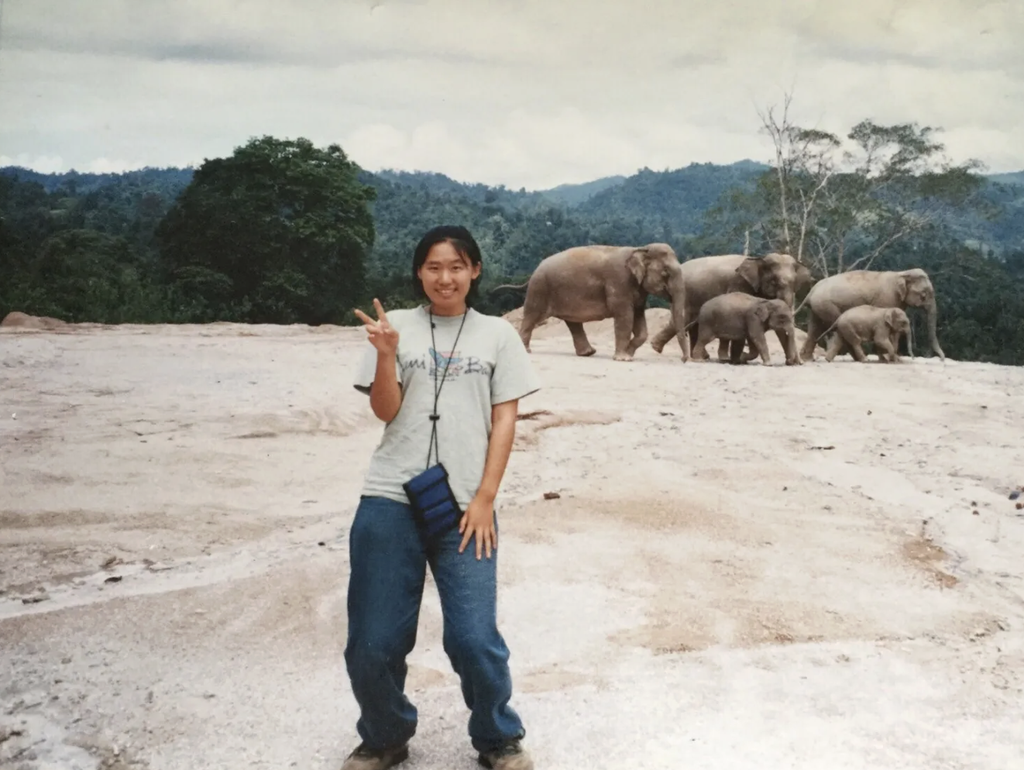
In 1996, while studying tropical fruit trees at Tokyo University of Agriculture, I travelled for overseas training to a jungle in Kelantan, Malaysia. A place with no telephone, no electricity, no running water. The only way to reach anyone was one large two-way radio. The first thing the local boss said to me was, “Get home to Japan alive.” There were “beware of elephants” signs on the roads.
Shopping meant the market — meat hung in whole pieces, and you had them cut wherever you liked. Even so, once the body and the mind grew used to it, I came to feel that a person can live anywhere.
It was here that I first met Islam. Before I knew it, everyone around me was Muslim. It was here I first saw the hijab. “Why are they all wearing the same thing in this heat?” At the time, that was about as far as my thinking went.
My earlier work, and raising a child
I came home, graduated, and joined an agriculture-related company. I was absorbed in the work; in a male-dominated company I became its first woman section chief and was given its largest department.
But in my thirties, at a company whose president held that “anyone who can’t work weekends is not a real employee”, it was clear that having a child would mean I could not stay. After fertility treatment, I gave birth to my first daughter in 2009. About a year later, I left the company.
Raising a child had no breaks and no days off. I spent my days apologising — “I’m sorry” — after she was asleep, for having lost my temper during the day. I had no friends in Fukushima, so I went from playground to playground, widening a circle of mothers.
In that time I met many women who were raising children. Every one of them was capable, patient, ready to act. It seemed such a waste that their strength was not being used in society.
“Wasted strength” and “wasted things”
Learning that many women had left their jobs in the same situation, I thought: I want to build a company that can make use of these women’s strength.
Turning over what to make, I remembered the hijab I had seen as a student. When I looked into it, the Muslim market was a size I had never imagined — roughly one in three people in the world, and still growing. And there was no company in Japan making hijab.
In February 2016, I founded WATASI Japan LLC in Shirakawa, Fukushima. Women raising children in Fukushima came together, and we handle everything from planning to manufacture and sale.
“Wasted strength” (women raising children) × “wasted things” (kimono being thrown away). That is the starting point.
The three meanings of “WATASI”
- Watashi (“I”) — holding dear the feelings of women raising children, and the feelings of Muslim women
- Adding “wa” (harmony) — the Japanese spirit of harmony
- Watashi (“a bridge / a crossing”) — bridging Japan and the world
From the women of Japan, to the women of Islam.
Turning to the kimono
In Japan the kimono industry has declined, and more and more kimono have nowhere to go.
I was told this at one of our suppliers. Many of the people who come to sell a kimono arrive with their family, as they move into a care home. “This is a keepsake, please don’t sell it,” an old woman says, while her family talks her round — and she watches the kimono being sold. The supplier said to me, “These kimono have been treasured; you must be sure to give them new life.” It steadied me.
When we took a kimono home, unpicked it piece by piece, washed it, pressed it and re-cut it, it was reborn as a garment with a startling brilliance.
The kurotomesode a mother wears at a wedding often carries patterns chosen to wish “for the child’s happiness”. Entrusting a feeling for one’s child to a garment — the kimono, I believe, is the beauty of the Japanese woman herself.
First, go there
“You won’t understand until you go,” I told myself, and in 2015 I travelled to Malaysia and went round the market. I discovered the hijab as fashion — a world called “Muslim fashion”.
Six months later I ran a trial sale, and felt keenly the gap in price between there and Japan, and the difference between “what we want to sell” and “what people there want to buy”. I learned, first-hand, how hard it is to sell abroad.
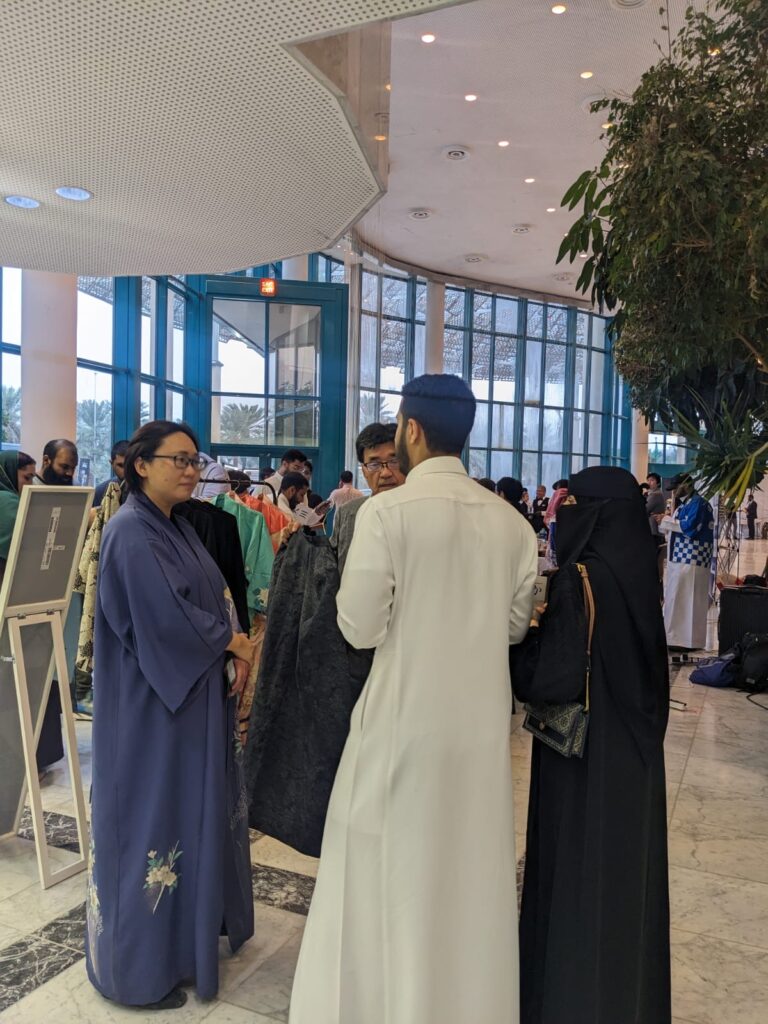
So — from Japan first. Talking with Muslims living in Japan, listening, making improvements, I was told: “For a Japanese company to make and sell hijab is something that can dissolve prejudice against Islam in Japan, and be a light for Muslims living here.”
Making it, in the region
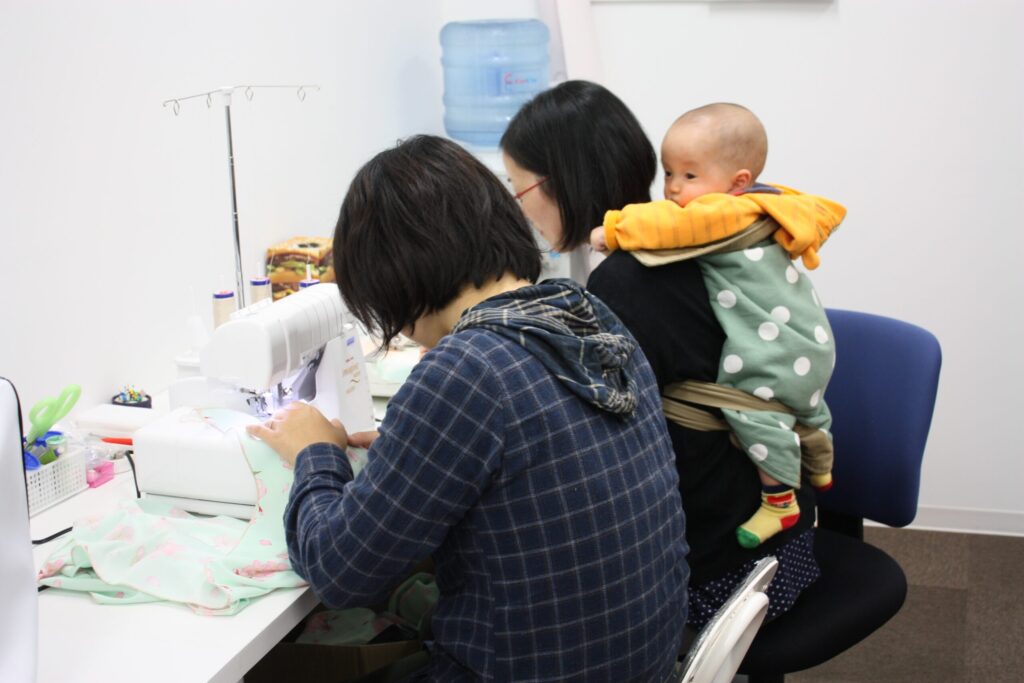
It began with piece-work by women raising children; now we partner with a sewing workshop in Shirakawa and have apprenticed to a seamstress in her seventies to carry on the craft. The unpicking of the kimono is done by a local welfare facility.
Unpick, wash, press, cut, sew — people of many different situations in the region share the steps.
→ Read more at Craftsmanship
It begins with knowing
As the work went on, I met many Muslims and listened to them. And I came to see how much prejudice against Islam there is in Japan — because people have never met Islam directly, and only one-sided information flows.
On a hijab research trip in Indonesia, someone said to me, “It’s the Japanese who are the real Muslims.” They had watched footage of the 2011 disaster, seen people in the affected areas keeping their place in line at the water points and helping one another, and been moved: “This is the true face of Islam.”
At a mosque in Otsuka, when I said “I’ve come from Fukushima,” the reply was, “Are the people of Fukushima well?” Right after the disaster, Muslims led by that mosque had come from Tokyo to Fukushima to cook and hand out meals — from safe Tokyo, to a Fukushima no one could be sure about. My tears came.
One Muslim woman said to me, “It makes us very happy that you — who are not Muslim — make hijab for us.”
Fukushima still carries prejudice from the nuclear accident. Muslims are held in prejudice too. Prejudice is born of not knowing. Bringing two beautiful things together can be a doorway to knowing each other’s cultures in a positive way — that is WATASI JAPAN’s hope.
From here
To take the kimono that a grandmother, and her grandmother before her, kept with care, and remake it into a hijab by the hands of women in Japan today. To carry the wish held within it — “may the child be happy”, a wish shared the world over — out to the world, regardless of country or religion.
May this single piece of cloth be a small beginning toward a world without prejudice.
→ Craftsmanship / Modest fashion and WATASI JAPAN / Press & Recognition / Official store
The founder
Junko Nawa
- February 1975: born in Aichi, raised in Yokohama
- 1995: transferred into International Agricultural Development, Faculty of Agriculture, Tokyo University of Agriculture (specialising in tropical fruit trees)
- 1996: a year’s leave for agricultural training in Kelantan, Malaysia
- 1998: graduated; joined an agriculture-related company
- December 2009: gave birth to her first daughter
- December 2010: left the company
- February 2016: founded WATASI Japan LLC
- 2017: certified as a “Furusato Global Producer” (subsidised programme, Small and Medium Enterprise Agency)
- 2019: Award of Excellence (JBIA Award), Fukushima Venture Award