One kimono, remade into cloth you can wear
Every WATASI JAPAN piece is made from a kimono that was actually worn in Japan. We never use newly woven fabric. Kimono that have finished their role are sourced, unpicked, washed and re-tailored — labour-intensive work carried out piece by piece by women artisans in Shirakawa, Fukushima.
1. Sourcing and choosing the pattern
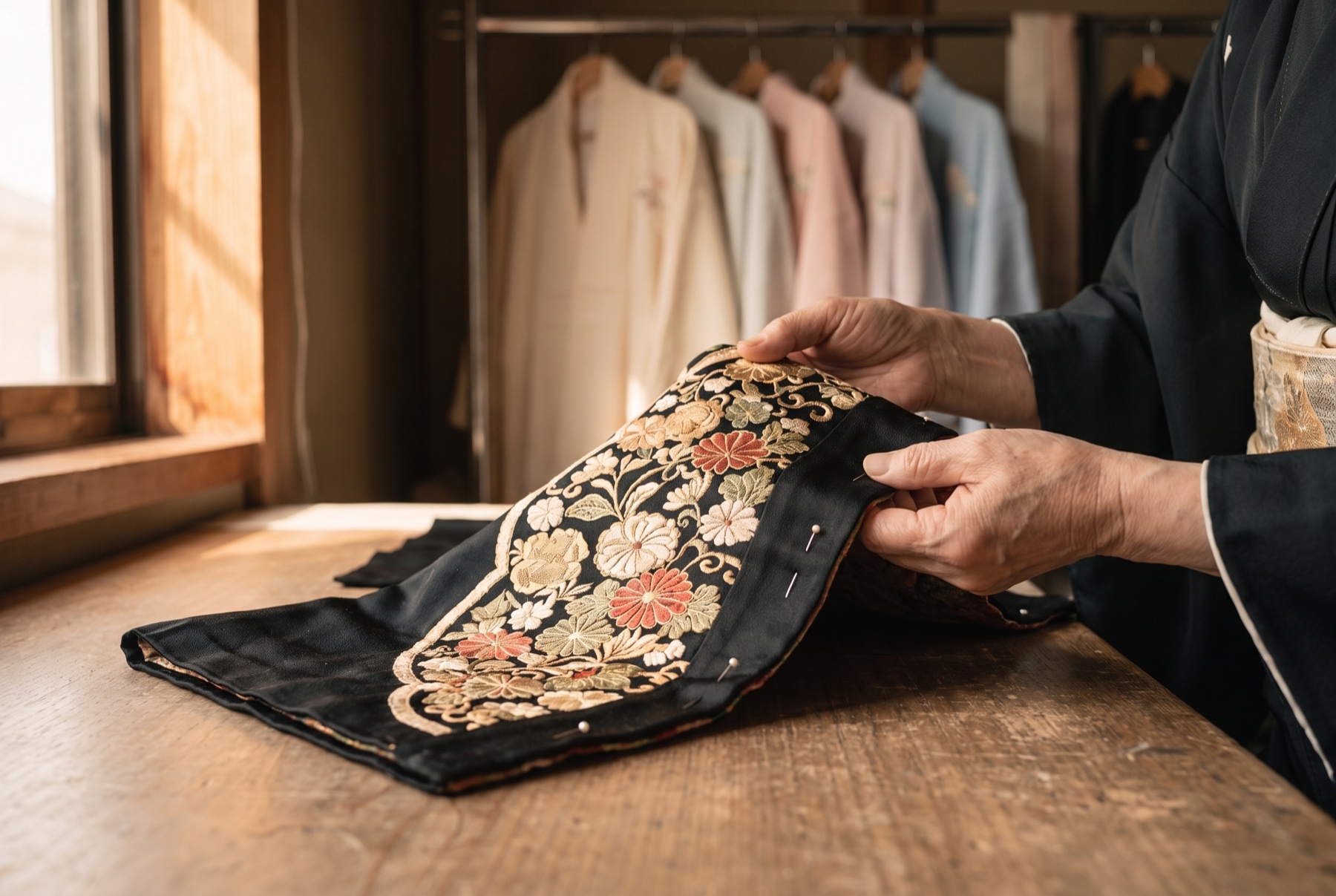
At the centre of our work is the kurotomesode — the most formal kimono a married woman wears, worn by mothers at their child’s wedding. We buy them from vintage-kimono dealers, and people also give us kimono they no longer wear.
From each one we remove any motif to be avoided under Islamic teaching — figurative images of people or animals — and select only botanical, geometric and natural patterns. Going through tonnes of fabric to find what can be used is the most time-consuming step of all.
2. Unpicking
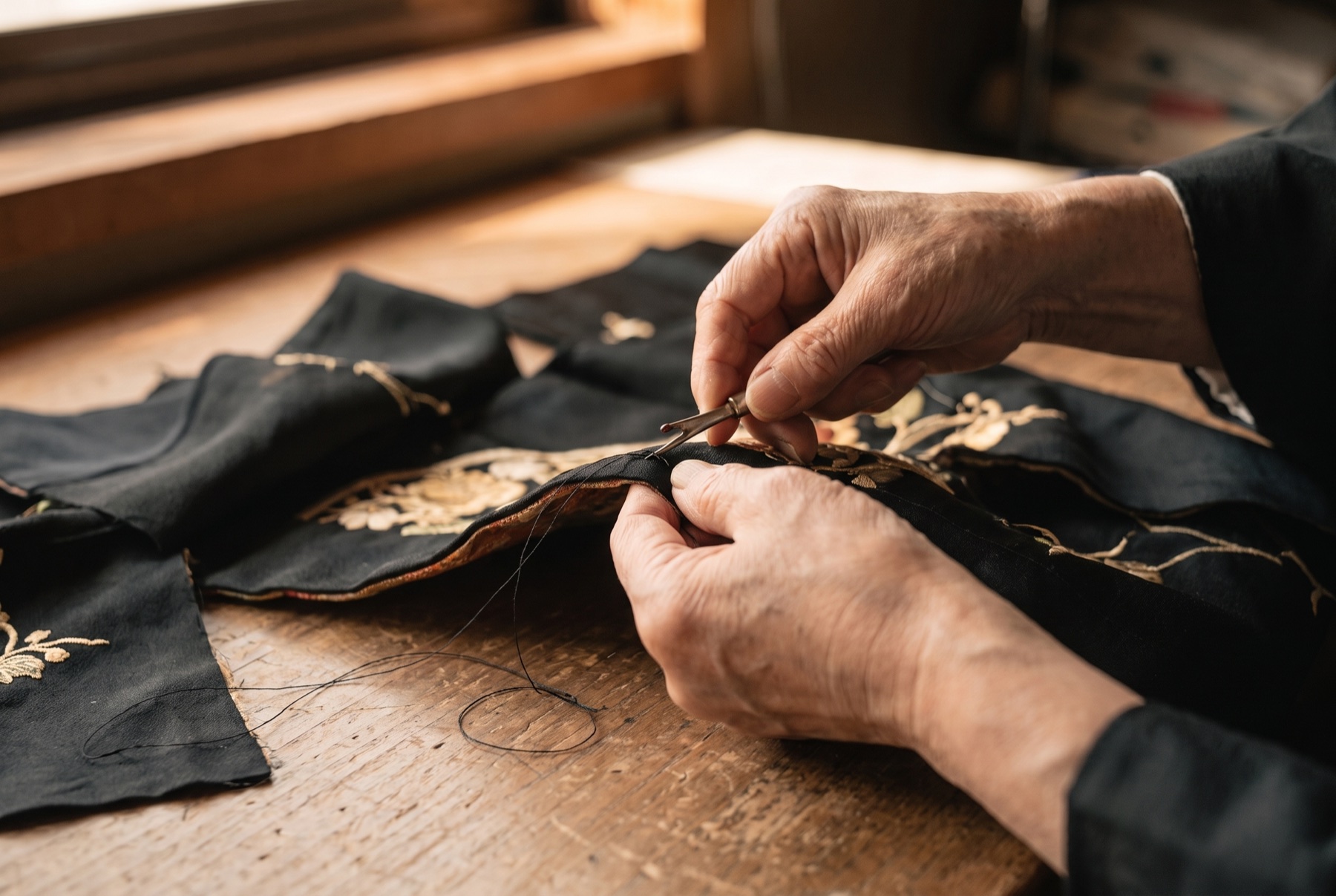
Each kimono is carefully taken apart along its seams. It is patient, time-consuming handwork, and this step is carried out by a local welfare facility — a way of sharing the work across the community.
3. Washing and pressing
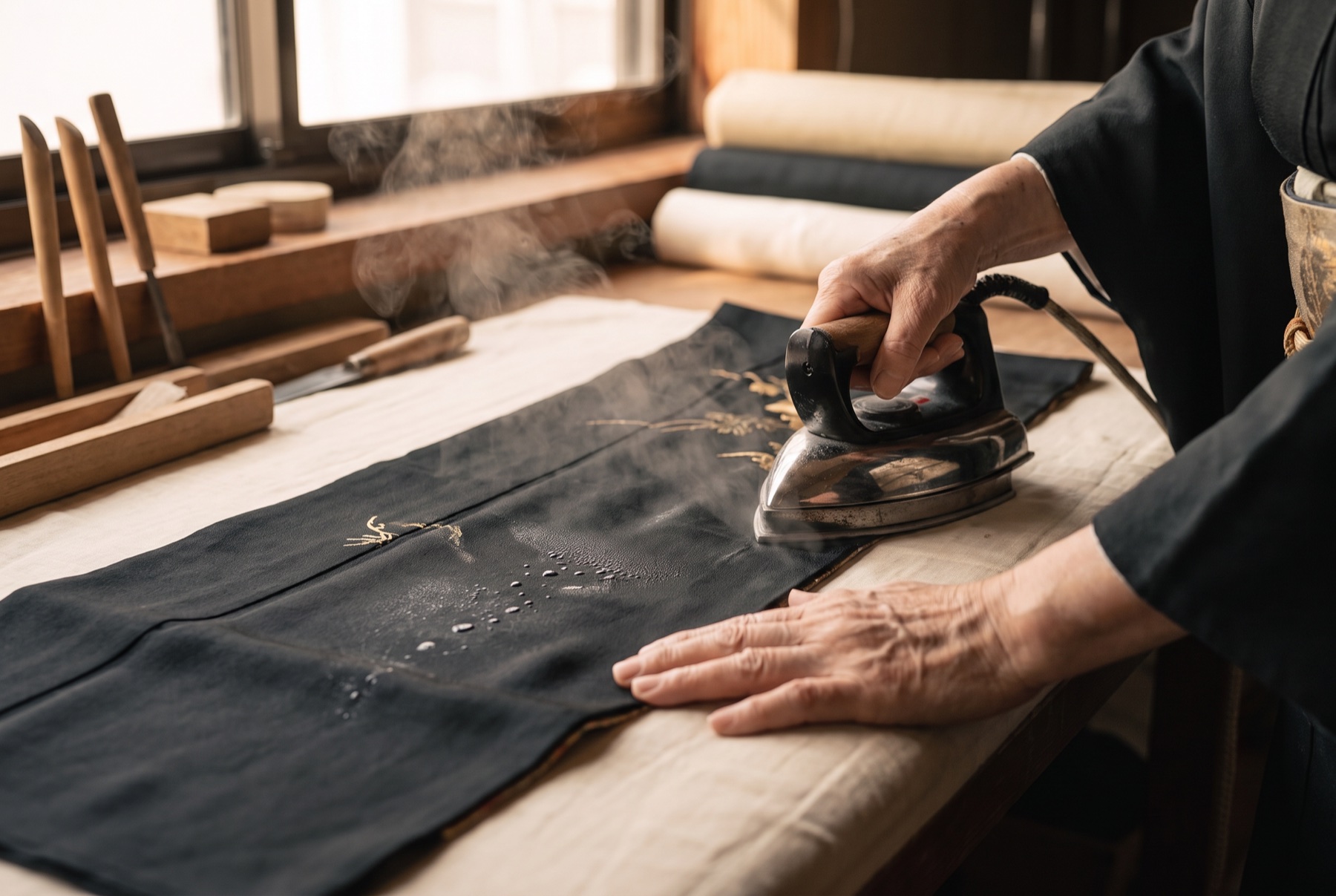
The unpicked fabric is washed and pressed before it moves on, and finished with ozone cleaning — releasing decades of fold-lines and bringing the silk back to life.
4. Pattern-matching and cutting
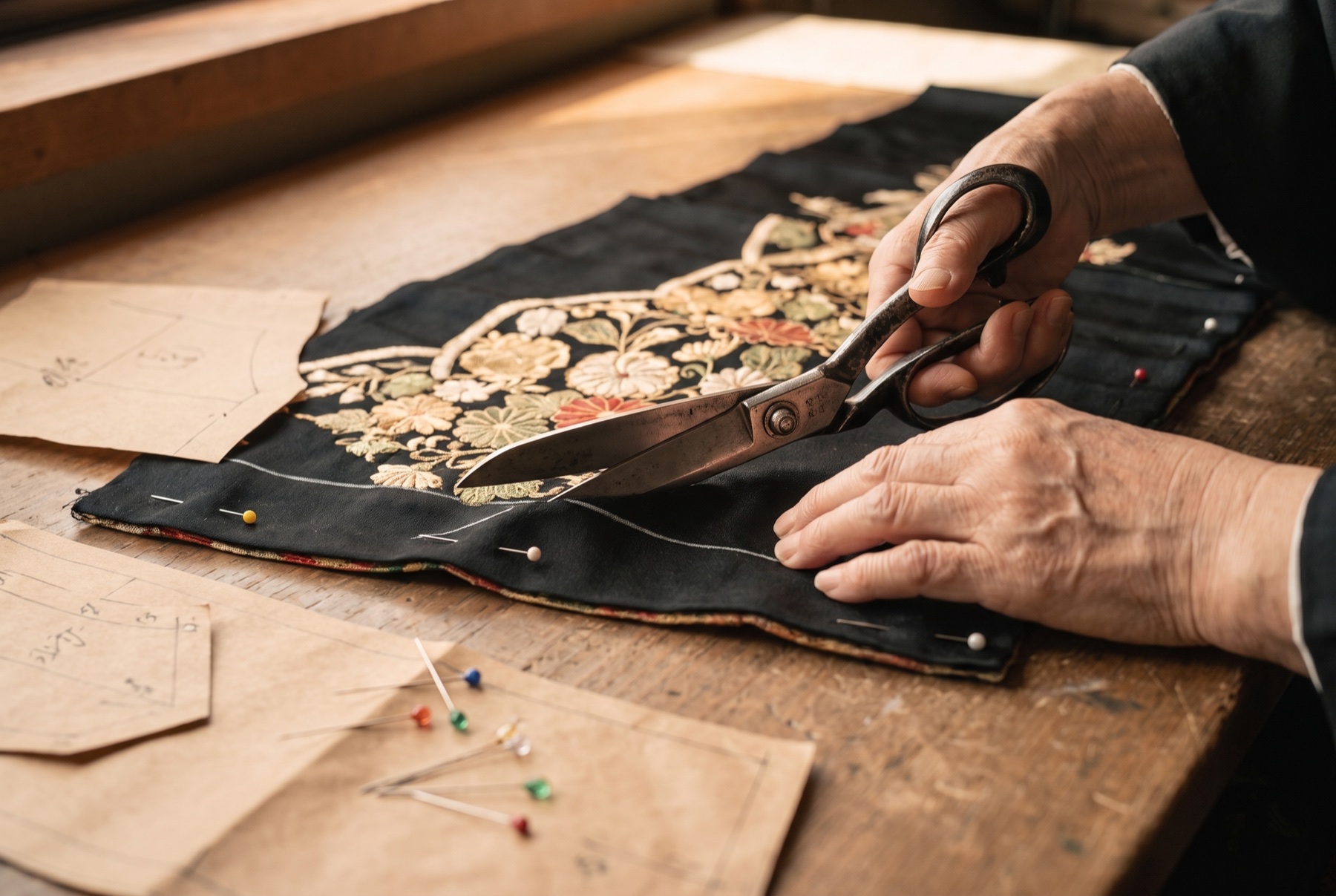
Looking at how the pattern falls, we decide where and how to cut. No two pieces are ever finished the same way. The fabric is cut at a sewing workshop in Shirakawa.
5. Sewing
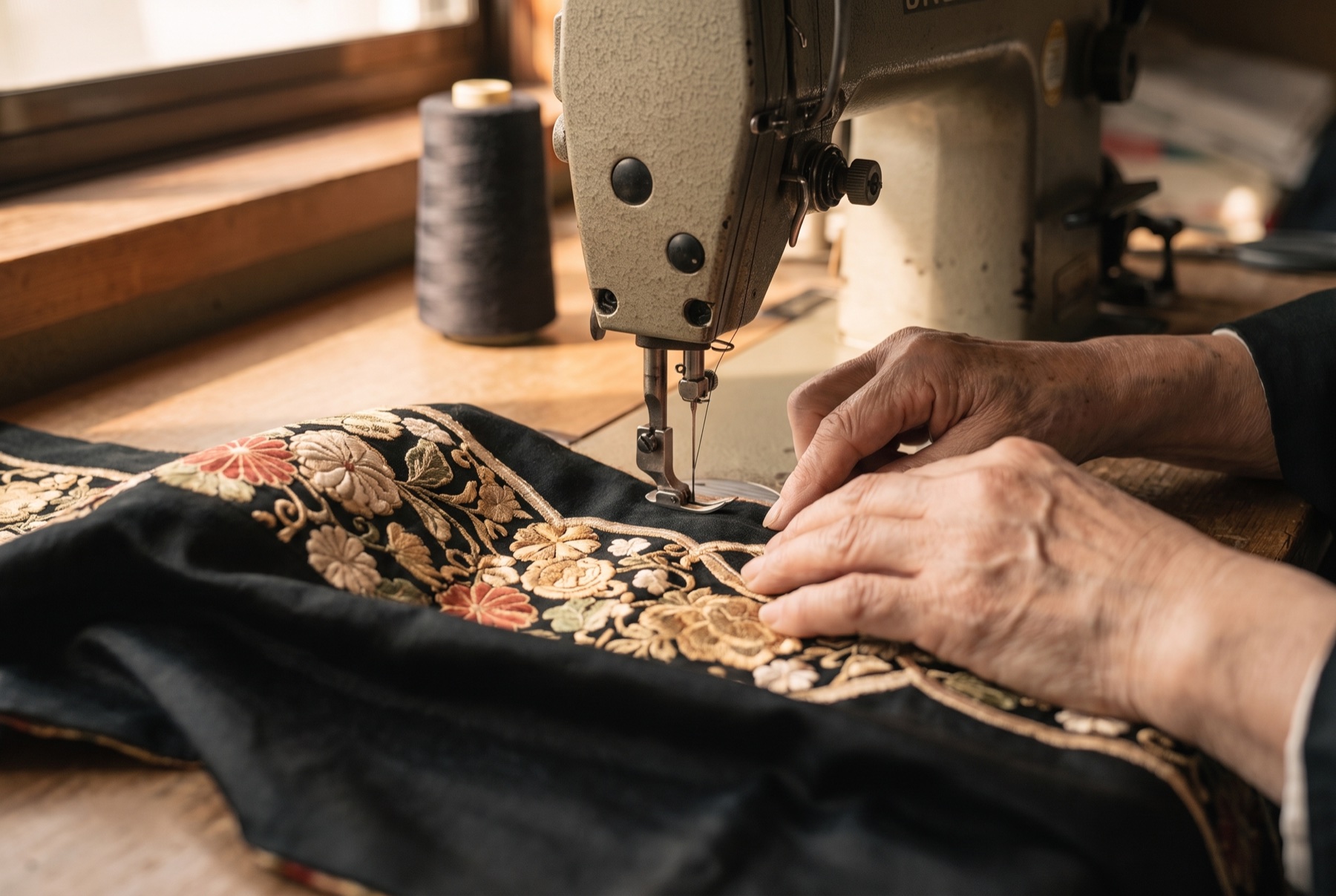
Each piece is sewn one at a time, using skills passed down through an apprenticeship with a seamstress in her seventies — one piece at a time, never on a production line. It is work carried out by local women, continuing from the piece-work by mothers with young children that the company began with.
6. Inspection and finishing
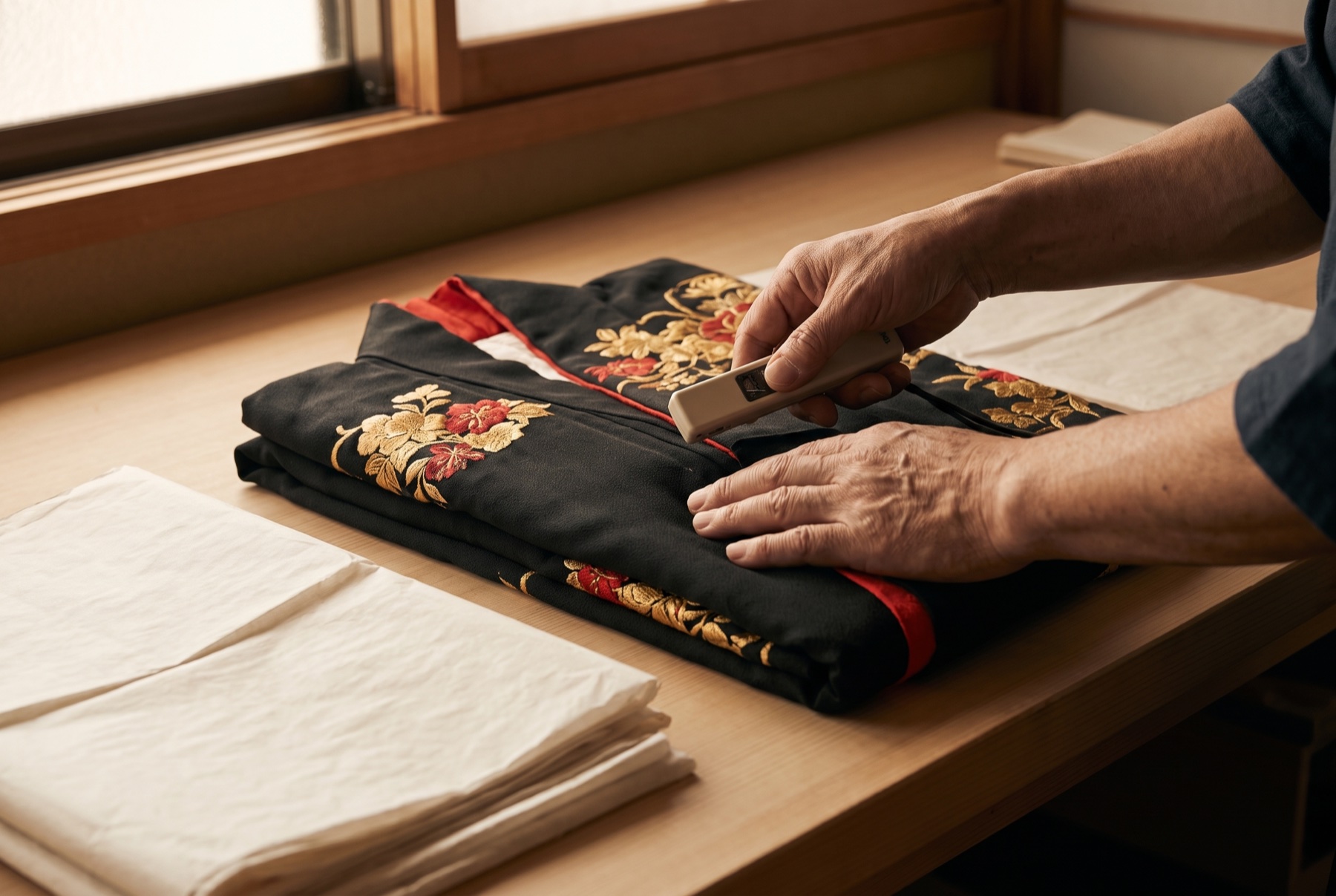
Every piece is passed through a needle detector; the embroidery, inspection and packing are all done individually, piece by piece. Because no two kimono are alike, every WATASI JAPAN piece is one of a kind — the pattern placement and the feel of the silk that belong to that single cloth are kept as they are.
About the kurotomesode
- It is the most formal kimono a Japanese woman wears. At a wedding, only those closest to the couple — the mothers, the go-between — wear it.
- The upper body is plain black; the pattern runs across the seams along the hem in the edozuma style. The white cloth is tacked into shape, the design drawn on, then it is taken apart again to be dyed — two weeks to a month of handwork. Department stores sell them from around ¥200,000, and artist pieces can exceed ¥1,000,000.
- One garment uses roughly 2,500 km of silk thread — the yield of 2,500 to 4,000 cocoons.
- It carries a family crest. The kurotomesode bears the highest number: five crests.
- The name tomesode, “fastened sleeve”: long ago an unmarried woman answered a courtship by waving her sleeves — side to side for yes, up and down for no. As a sign that a married woman no longer needs to, the shortened, fastened sleeve became formal wear.
→ See the meaning behind the motifs, including family crests and the edozuma pattern
So much work goes into a single garment that is now rarely worn even in Japan, and almost never seen abroad. Turning that beauty into something worn every day, anywhere in the world — that is what WATASI JAPAN makes.
The making, in numbers
- Material: silk from a kurotomesode — the highest grade of formal kimono — remade into a one-of-a-kind piece of cloth. As these are vintage garments, we cannot state an exact fibre composition.
- Time per piece: 2–4 weeks
- Silk thread per piece: up to about 2,500 km
- Pattern selection: choosing usable motifs from tonnes of fabric
- Made in Shirakawa, Fukushima — cutting, sewing, inspection and packing all done piece by piece
Making it, shared across the region
Our making is not done by one company alone.
- A welfare facility — unpicking the kimono
- Local sewing workshops and a veteran seamstress — cutting, sewing, passing on the craft
- Mothers with young children — an involvement that continues from the company’s founding piece-work
- Vintage-kimono dealers, and the people who give us their kimono — supplying the material
Returning work to a declining local garment industry, with people in many different situations sharing the steps — we build it as a network, not a line.
Being sustainable
Upcycling kimono uses none of the resources, water or energy needed to make new fabric. A kimono that might have been incinerated or thrown away is passed to its next owner as cloth to be worn every day. Carrying culture forward and caring for the environment, at the same time — that is what “ethical” means to us.
The kurotomesode is the Japanese woman herself
The kurotomesode is worn by a mother who has raised her children, on the finest day of her life — her child’s wedding. Held in it is not only the labour and the cost but a mother’s wish for her child’s happiness, kept across generations. That wish has no religion and no nationality.
A kurotomesode that does not fade over long years is like the figure of the Japanese woman who has protected her home and gathered laughter-lines. When a single garment left in the corner of a shop is remade into a new form, its beauty makes itself felt again.
We pass the beauty and the feeling handed down from our ancestors to the next generation, changing its form as we go. That is the root of how we make things.
See what is made
▶ See our pieces in the official store
→ About the kimono hijab / About the kimono abaya & robe / WATASI STORY / Modest fashion and WATASI JAPAN