A gift for a Muslim friend — if you only read one thing
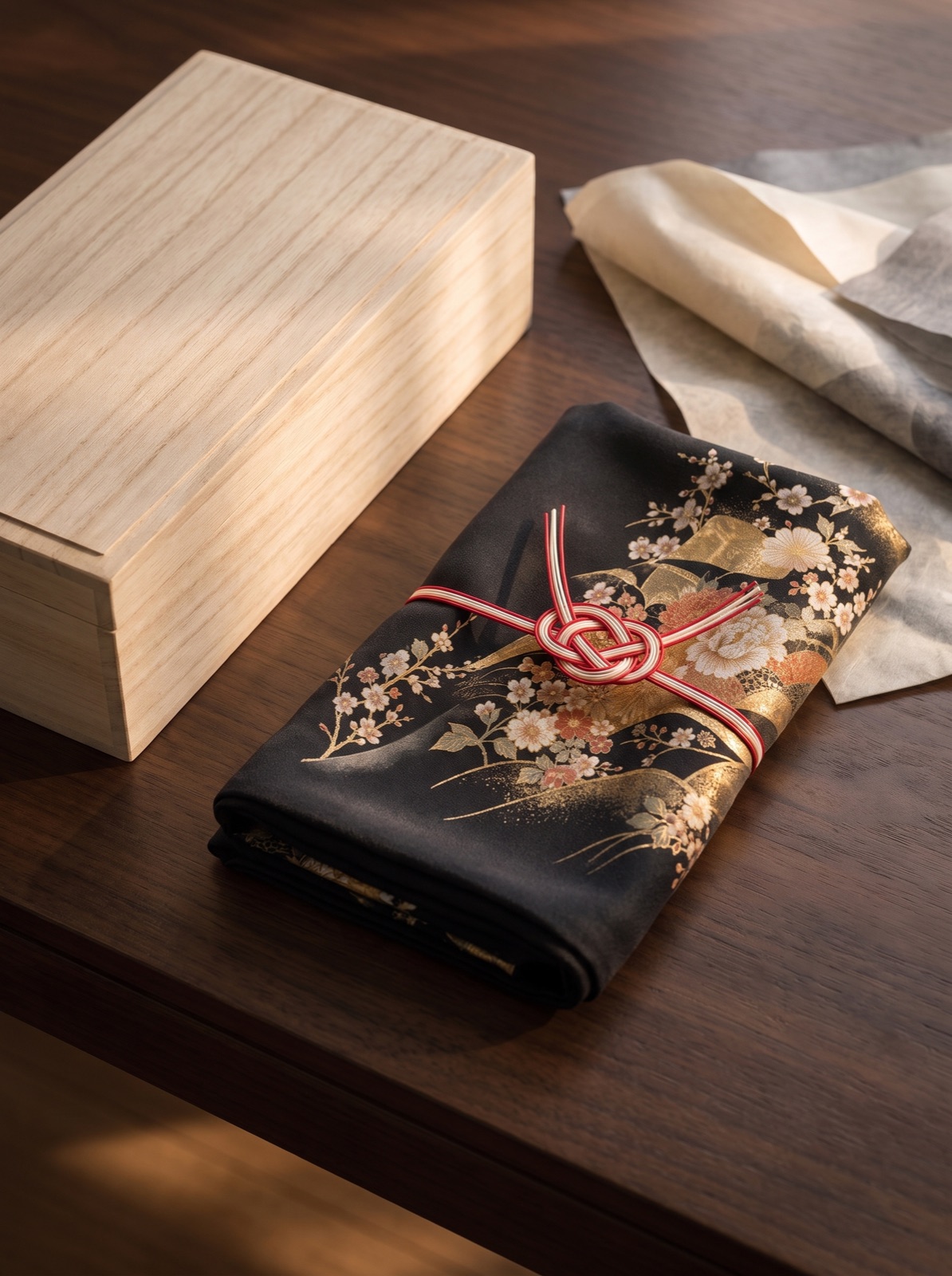
Choosing a gift for a Muslim can feel daunting, as if there are many special rules. In practice, a few considerations are enough. This page brings together what to avoid, what is welcomed, and the manners of giving — by occasion and by budget.
What matters most is that your wish to respect the other person’s culture comes through. It does not have to be perfect.
The basics
- Avoid anything that could be an idol — figurines or dolls in the shape of people or animals, pictures with faces. Landscapes, plants and geometric patterns are fine.
- Avoid ingredients derived from pork or alcohol — check the ingredients of food, cosmetics, perfume, and sweets containing gelatine. A “halal” label is reassuring.
- Do not give alcohol itself — choose on the assumption that the person does not drink.
- Hand it over with the right hand, or both hands — avoid handing something with the left hand only.
- Be careful with strong scents — perfume and incense divide opinion. Choose something unscented or light.
- If you invite them to eat, choose a halal restaurant — check in advance if a meal will accompany the gift.
When in doubt, leaving out “food, things applied to the skin, and shapes of living creatures” is safe.
Gifts to avoid (examples)
- Pigskin wallets and belts; gummy sweets and marshmallows made with pork gelatine
- Wine, sake, whisky, liqueur-filled chocolates, and foods made with sake lees
- Beckoning-cat, Daruma, zodiac-animal figurines, kokeshi, hina dolls and other things shaped like people or animals
- Paintings and photo books with large images of people or faces
- Strongly scented perfume or aroma (unless you know the person’s taste)
Views vary by person and household. If you are close, quietly asking their preference is the surest way.
Welcomed gifts
Things that are fine in quality, practical, distinctly Japanese, and meaningful are welcomed.
- Textiles — hijab, shawls, scarves — used every day, they stay in the home rather than being consumed. They can be given without worrying about size or body shape, and without the ingredient concerns of food. The colour and pattern carry your feeling.
- Fine towels, furoshiki wrapping cloths, folding fans, tenugui hand towels
- Dates, halal-certified sweets, Japanese tea and black tea
- Stationery, tableware (without people or animal patterns), washi-paper goods
Why WATASI JAPAN suits gift-giving
- Only non-figurative patterns are chosen — motifs of people and animals are avoided; only botanical, geometric and natural patterns. The work of checking each pattern has already been done for you.
- Genuine vintage kimono silk, one of a kind — no two are alike, so “I chose this for you” comes through.
- A wish is held in the pattern — for example, chrysanthemum for long life; pine-bamboo-plum and crane for celebration and long life. You can hand it over with its meaning.
- You give the story too — the handwork of women artisans in Fukushima, life returning to a sleeping kimono, a brand introduced to 150 countries on NHK WORLD. A single line on a card gives the gift depth.
- Compact and lightweight — packs flat in a suitcase without adding bulk or weight.
- A natural talking point about Japan — kimono is a Japanese tradition, and a piece that brings Islamic and Japanese tradition together is very well received.
- Trusted expertise — WATASI JAPAN has over ten years’ experience as a specialist maker. Please feel free to consult us if you are unsure what to choose.
- Message cards and wrapping available — ask each store for details.
Choosing by the recipient’s country
Junko Nawa, WATASI JAPAN’s founder, lived in Malaysia for a year during university and has kept up exchanges with Muslims in many countries since. What people “wear day to day” differs by region.
| Region | Worn day to day | Suggested gift |
|---|---|---|
| Malaysia, Indonesia, Southeast Asia | Hijab (increasingly enjoyed as fashion) | Kimono hijab, scarf |
| Middle East (UAE, Saudi Arabia, etc.) | Abaya (usually black; colours growing) | Kimono robe (abaya form) |
| Any country | — | A kimono bag, or a table runner made from an obi (availability varies) |
Choosing by occasion
| Recipient | Suggestion | A note |
|---|---|---|
| A friend or acquaintance | Kimono hijab, shawl | Let the colour and pattern suit them; something they can use every day is welcomed |
| A business contact | Kimono hijab, shawl, abaya | Not too personal, and not discourteous. For a company gift → For companies and organisations |
| Hosting a visitor to Japan | Kimono hijab, shawl | A memento of the trip that packs flat to carry home |
| A wedding gift | A one-of-a-kind piece with an auspicious pattern (pine-bamboo-plum, crane) | Choose a pattern that wishes “prosperity and long life”, and add its meaning |
| Someone travelling to a Muslim country (or for yourself) | Kimono robe (abaya form) | They are often invited to formal occasions and parties; a kimono is hard to dress in and carry, but a robe is easy — and the kimono makes good conversation |
By budget
- ¥10,000–¥20,000 — kimono hijab, shawls (one of a kind, vintage kimono silk); mostly ¥15,000–¥20,000
- Around ¥20,000+ — a hijab combined with a bag
- ¥40,000 and up — kimono robe (¥45,000–¥70,000), a set of several pieces, or larger corporate quantities
Find a gift
▶ See pieces chosen as gifts (official store) — https://watasijapan.shop/collections/gift
▶ Hijab & shawls — https://watasijapan.shop/collections/hijabs-shawls · ▶ Kimono robe — https://watasijapan.shop/collections/kimono-robes
- Price guide: hijab & shawls ¥15,000–¥20,000 / kimono robe ¥45,000–¥70,000 (tax included, one of a kind)
- Ships to more than 50 countries; direct delivery to a friend abroad is possible
- Also available at stockists (HALAL-Ya, Asakusa / JAPANeid, Osaka)
- For corporate use — promotional items, commemorative gifts, overseas presents → For companies and organisations
Wrapping — “we wrap it in Japanese tradition”
Wrapping itself is a Japanese culture. Pieces are delivered in simple wrapping (free) as standard, with Japanese-style wrapping available on request (no people or animal patterns are used on the wrapping).
| Type | What it is | Suited to |
|---|---|---|
| Pine (kimono paper sleeve / original packaging — a paulownia box is also available on request) | An abaya comes in a paper sleeve (tatōshi) of the kind used to store kimono; a hijab comes in our original packaging. On request, we can place the piece in a paulownia box — the same wood used for kimono chests — wrapped in a furoshiki cloth. Paulownia repels insects and carries a distinctly Japanese scent | Business meetings; someone special |
| Bamboo (paper box) | A finer paper box; wrapped in a paper of your choice | A close friend or a mentor |
- An English message card can be added free (please request at the time of order).
- A “pattern card”, explaining the meaning of the pattern in English, can be added free to a kimono hijab.
Prices, eligible items and availability for direct overseas delivery may change; please check with each store for the latest.
FAQ
How do I know how strictly the person observes the rules? Leaving out “food, things applied to the skin, and shapes of living creatures” is fine in almost all cases. This is why textiles are a safe choice.
Is Japanese-style wrapping (noshi) all right? Yes. Just check that the wrapping paper carries no people or animal patterns.
Are cash or gift vouchers rude? It depends on the relationship. For someone senior to you or a business contact, something with a physical form conveys more feeling.