The patterns carry wishes
Every pattern drawn on a kimono has carried a wish — for the wearer, and for those they love. WATASI JAPAN removes motifs to be avoided under Islamic teaching — figurative images of people or animals — and selects only botanical, geometric and natural patterns. Here are the patterns most often found on a kurotomesode, and what they mean.
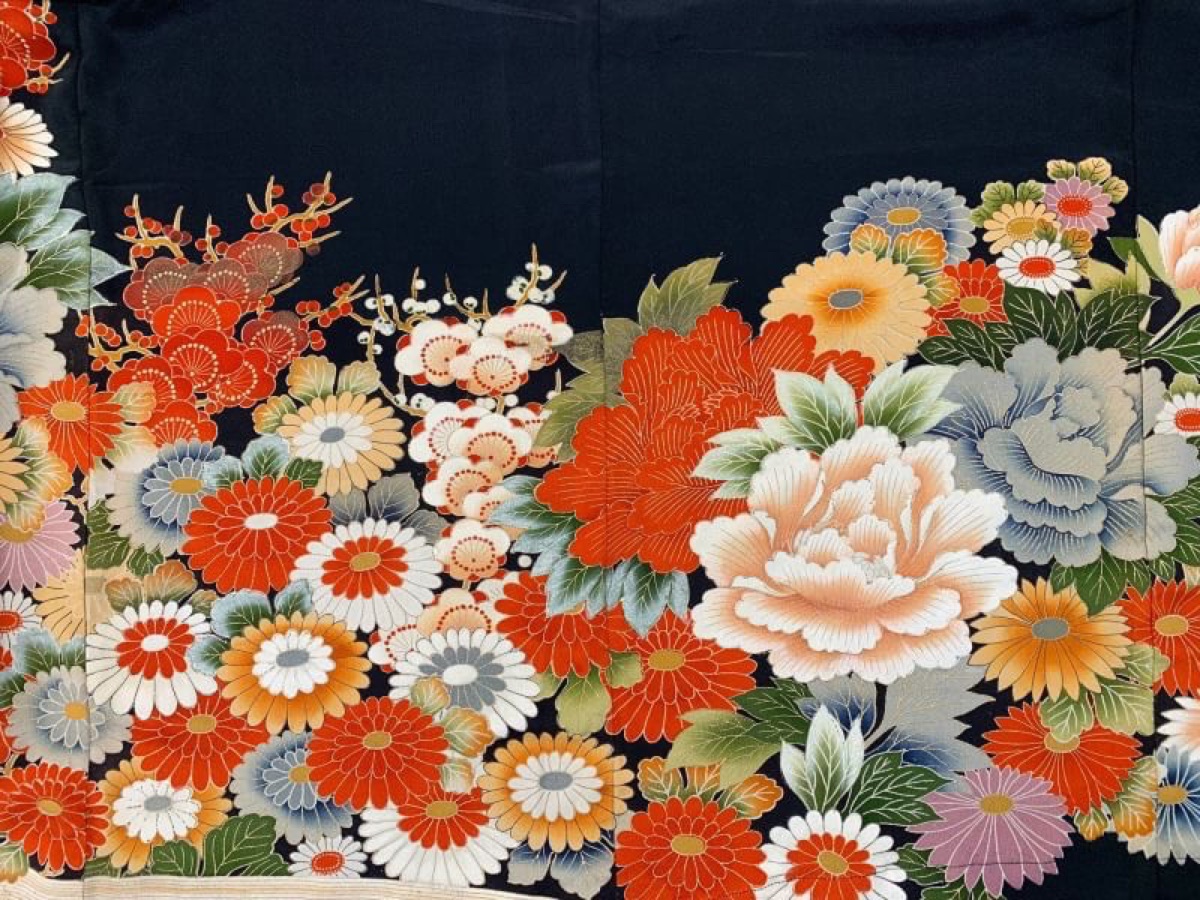
Botanical patterns
- Pine (matsu) — evergreen and long-living; a symbol of long life, used for celebrations.
- Bamboo (take) — supple strength that does not break; its fast growth also stands for prosperity.
- Plum (ume) — the flower that blooms first, in the hardest cold. The first pattern worn in the new year.
- Pine-bamboo-plum (shō-chiku-bai) — the three together: the classic auspicious pattern for celebration and long life.
- Chrysanthemum (kiku) — a medicinal herb of long life in China, brought to Japan in the Nara period. A pattern of high standing, used in the Imperial crest, and wearable in any season.
- Peony (botan) — “king of a hundred flowers”: a symbol of a beautiful woman, of happiness and nobility, and of long life.
- Wisteria (fuji) — a noble colour, sung of in the Man’yōshū. Vigorous in growth, it carries wishes for long life, many descendants and a good harvest; the sound “fuji” echoes the word for “deathless”.
- Maple (kaede) — a marker of the Japanese sense of season, loved too for a shape like a baby’s hand.
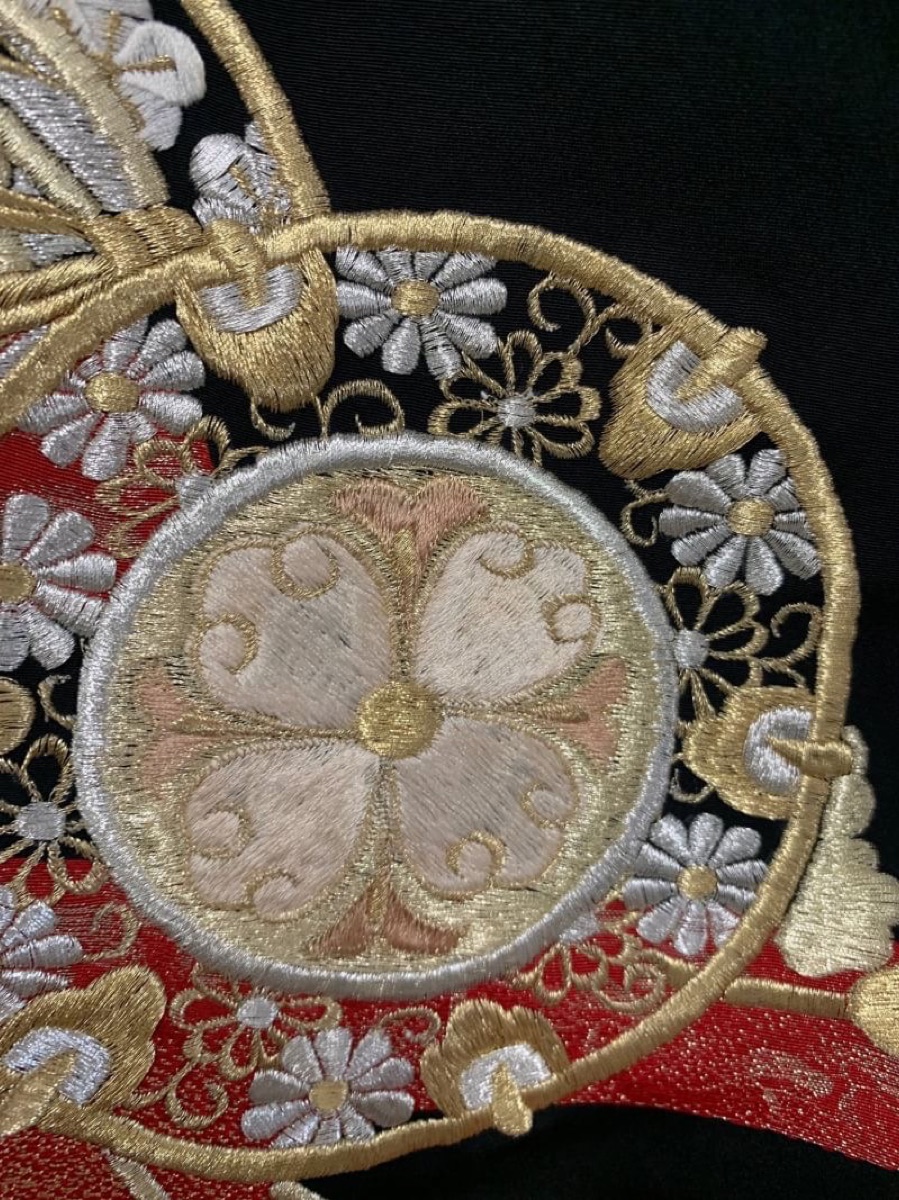
Objects and geometric patterns
- Fan (ōgi) — its shape widening outward stands for growth, and for happiness and prosperity spreading without end.
- Noshi — a stylised strip of dried abalone. The bundle of long ribbons stands for people tied to one another; a token of sharing happiness, and so a pattern fit for a wedding.
- Imperial cart (gosho-guruma) — the ox-carriage of Heian nobility, rendered as a pattern. Elegant and auspicious, favoured for wedding dress.
- Tortoiseshell (kikkō) — linked hexagons. The tortoise, with the crane, is a symbol of long life; a pattern of high standing.
- Blue ocean waves (seigaiha) — calm waves spreading without end, carrying a wish for happiness that continues into the future and for a peaceful life.
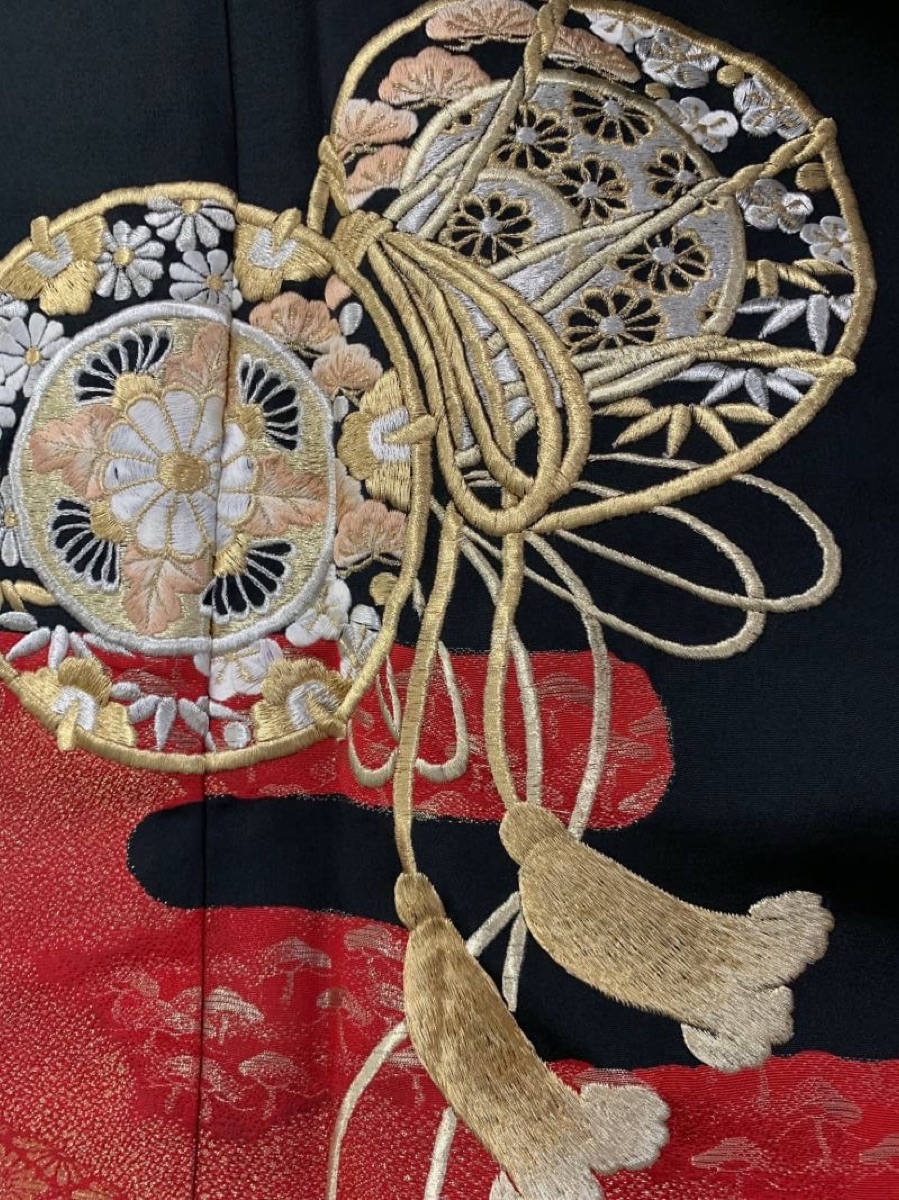
The kurotomesode
These patterns were drawn along the hem of the kurotomesode — the most formal kimono, worn by a mother at a Japanese wedding — to wish for “the prosperity of the house” and “the happiness of the child”. That wish has no country and no religion.
WATASI JAPAN checks the pattern on every single piece and tailors only those that can be worn regardless of religion or nationality. A “pattern card”, explaining the meaning in English, can be added free to a kimono hijab.